
The story of the Bombay Stock Exchange and the people who shaped its growth: From wars and bomb blasts to speculators, reformers and wealth creators.

The number of companies with promoters whose demat accounts were frozen by the stock exchanges due to non-compliance increased over the past year. The BSE froze promoter demat accounts in 457 companies, according to data from the Securities and Exchange Board of India's (Sebi's) 2024-25 annual report released on August 12.

The exchanges have also revised the instances which will be considered a technical glitch excluding instances where the broker is not at fault.

The National Stock Exchange (NSE) is expected to file its preliminary IPO papers with Sebi next week, marking a significant step forward for the long-awaited public offering which has been delayed for nearly a decade due to regulatory issues.

The National Stock Exchange (NSE) is set to launch India's largest initial public offering (IPO), estimated at Rs 30,000 crore. This mega public issue will surpass previous records held by Hyundai Motor India and Life Insurance Corporation of India (LIC), marking a significant event in the Indian stock market. The move comes as India's primary market shows signs of recovery after a period of slowdown.
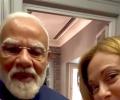
Shares of Parle Industries Ltd surged by 5% after Prime Minister Narendra Modi gifted Melody toffees to Italian Prime Minister Giorgia Meloni.

Indian benchmark indices Sensex and Nifty experienced a significant downturn in early trade, ending a five-day rally, primarily due to heavy selling in IT firms following a revenue growth guidance cut by global consulting giant Accenture.

India's market regulator, Sebi, has approved the re-introduction of open-market share buybacks through stock exchanges, effective August 1, 2026, alongside easing debt listing norms for RBI-regulated entities and simplifying rules for mutual funds and alternative investment funds.

Indian benchmark indices, Sensex and Nifty, experienced a decline in early trade due to uncertainty surrounding the upcoming US-Iran negotiations in Doha. Foreign fund outflows and a dip in major IT stocks further contributed to the market's cautious sentiment, despite mixed performance in global markets.

Indian benchmark indices, Sensex and Nifty, extended their rally for the fourth consecutive day, driven by a significant drop in crude oil prices and strong performance from IT firms, despite mixed global cues.

Indian benchmark indices, Sensex and Nifty, experienced subdued trading and turned flat on Tuesday as investors engaged in profit-booking following a recent rally, compounded by weak Asian market trends and fresh foreign fund outflows.

Indian benchmark stock indices, Sensex and Nifty, advanced for the second consecutive day, driven by softening crude oil prices and a positive trend in global markets. Despite some profit-taking in IT and metal shares, auto stocks outperformed, contributing to the overall gains.

Social stock exchange (SSE) saw its first listing on Wednesday, with SGBS Unnati Foundation becoming the first entity to take this route to avail financing. The foundation - engaged in vocational training of youth - raised Rs 1.8 crore from four investors. These include brokerage firm Zerodha and National Bank for Agriculture and Rural Development (Nabard).
Indian benchmark indices Sensex and Nifty rebounded in early trade, recovering from previous losses, driven by softening crude oil prices and renewed buying interest in blue-chip stocks. Analysts note that the fall in Brent crude below USD 77 has removed significant macro headwinds for India, contributing to market stability.

Metropolitan Stock Exchange of India (MSE) plans to raise Rs 120 crore from investors in an attempt to stay afloat. The beleaguered exchange's board has approved issuance of 1.19 billion equity shares of face value Rs 1 at a premium of Rs 1 through private placements, according to a disclosure on its website.

Hospital stocks have emerged as a strong theme in 2026, outperforming benchmark indices due to robust earnings growth, improved occupancy, higher average revenue per occupied bed, and aggressive expansion plans by major chains.

Indian stock market benchmark indices Sensex and Nifty rebounded in early trade, driven by a decline in crude oil prices, supportive global cues, fresh foreign fund inflows, and buying in blue-chips like Reliance Industries and HDFC Bank. Track Sensex, Nifty movement on June 22, 2026.

Fintech unicorn Razorpay has confidentially filed draft documents with SEBI for an Initial Public Offering, with market sources estimating the issue size between Rs 5,000-6,000 crore. This move comes as a rival firm, PhonePe, has paused its IPO plans.
The Securities and Exchange Board of India (Sebi) has proposed allowing celebrity endorsements for its regulated entities like AMCs and stock brokers, but only at the brand level, not for specific products or services, as part of a major overhaul of advertisement codes.

Algo strategies must be registered with stock exchanges.

Indian stock market benchmarks, Sensex and Nifty, saw gains in early trading, driven by anticipation surrounding the Reserve Bank of India's monetary policy decision, despite mixed global cues and significant FII outflows.

Indian benchmark indices Sensex and Nifty surged significantly in early trade, mirroring a global rally and a sharp decline in crude oil prices following the finalisation of a peace deal between the US and Iran to end their 107-day conflict and reopen the Strait of Hormuz.

Market benchmark indices Sensex and Nifty drifted lower in early trade on Monday amid renewed hostilities between the US and Iran. The 30-share BSE Sensex declined 63.65 points to 77,047.63 during initial trading. The 50-share NSE Nifty went marginally up by 16.55 points to 24,070.20. Later, the BSE benchmark dropped 246.54 points to 76,853.93, and the Nifty dipped 50.55 points to 24,005.45. Track Sensex, Nifty on June 29.
Indian benchmark indices Sensex and Nifty rallied in early trade, driven by a significant decline in Brent crude oil prices, which fell below the USD 73 per barrel level, and positive trends observed across most Asian equities.

With momentum building around the IPO, the NSE saw a surge in retail investors in the last two years, making it one of the widely traded stocks in the unlisted market.
Indian benchmark indices Sensex and Nifty recovered early losses to trade higher, supported by encouraging developments on the geopolitical front, specifically the US-Iran peace deal, and easing crude oil prices.
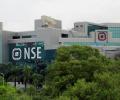
NSE's draft prospectus discloses a legal dispute over 5,000 shares allegedly transferred by mistake into an individual investor's demat account.

Indian benchmark indices Sensex and Nifty climbed in early trade, driven by buying in blue-chip stocks like Reliance Industries and ICICI Bank, alongside a notable cooling in crude oil prices.

Indian stock market benchmark indices, Sensex and Nifty, experienced declines in early trade due to escalating tensions between the US and Iran, which led to a surge in crude oil prices and weak global equity trends.
Indian benchmark indices Sensex and Nifty rebounded in early trade, tracking a recovery in global equity markets and an easing of hostilities between Israel and Iran, after a sharp fall in the previous session.
Indian stock markets extended their gains for a second consecutive session, with the Sensex closing 736 points higher, driven by a global equity rally and a significant drop in crude oil prices following the finalisation of a peace deal between the US and Iran to end their 107-day conflict and reopen the Strait of Hormuz.

Indian benchmark indices Sensex and Nifty experienced a significant slump in early trade, mirroring a sharp decline in global equities and a fresh spike in crude oil prices, exacerbated by simmering tensions in West Asia and a global unwinding of the AI-led rally. Track how sensex, Nifty fared on June 8.

Indian benchmark indices Sensex and Nifty climbed in early trade, driven by a significant drop in crude oil prices following reports of a potential 60-day ceasefire extension between the US and Iran, coupled with positive global market trends and buying in IT stocks.

Indian benchmark indices Sensex and Nifty rallied in early trade, driven by a positive trend in global markets, cooling crude oil prices following a US-Iran peace deal, and fresh foreign fund inflows.
Indian benchmark indices Sensex and Nifty surged significantly in early trade, tracking a global rally fueled by US President Donald Trump's declaration of an end to the war with Iran and a subsequent drop in crude oil prices.

Companies in the fast-moving consumer goods (FMCG) sector are losing favour with equity investors, with their price-to-earnings (P/E) ratio declining to its lowest level in six years, now trading at 38.8 times trailing earnings.

Fintech and enterprise technology firm Paramotor Digital Technology Ltd has confidentially filed draft papers with markets regulator Sebi for an initial public offering (IPO). The company submitted its draft papers under Sebi's pre-filing route, which allows issuers to keep details related to the issue size and other key information confidential until a later stage.

Indian equity benchmark indices Sensex and Nifty declined in early trade, driven by persistent concerns over the unresolved US-Iran situation and continued outflows from foreign institutional investors.

Indian benchmark indices, the BSE Sensex and NSE Nifty, snapped a four-day losing streak, with the Sensex climbing 382 points, primarily driven by a strong rally in IT sector shares. Major IT firms like TCS, Infosys, and HCL Tech saw significant gains, contributing to the market's recovery.

Indian benchmark indices, Sensex and Nifty, closed marginally higher after a volatile trading session, driven by value buying in IT and select blue-chip counters, despite global crude price hikes and a weak rupee.
